
Moderna Seminar Series - Chapter 1: Introduction to mRNA Medicines
February 9, 2022 | 22:41

February 9, 2022 | 22:41

February 9, 2022 | 12:39

February 9, 2022 | 26:37
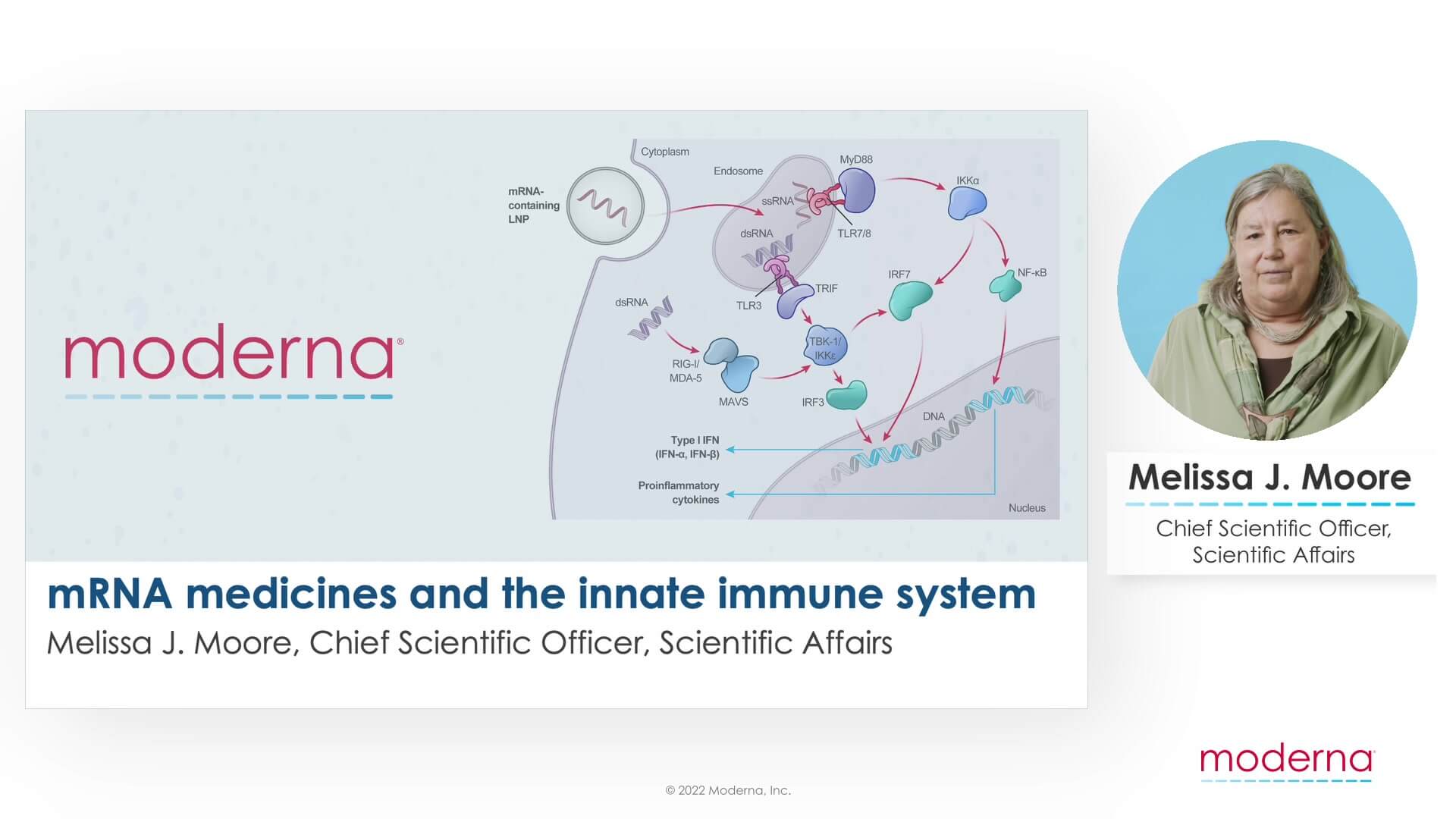
February 9, 2022 | 17:51
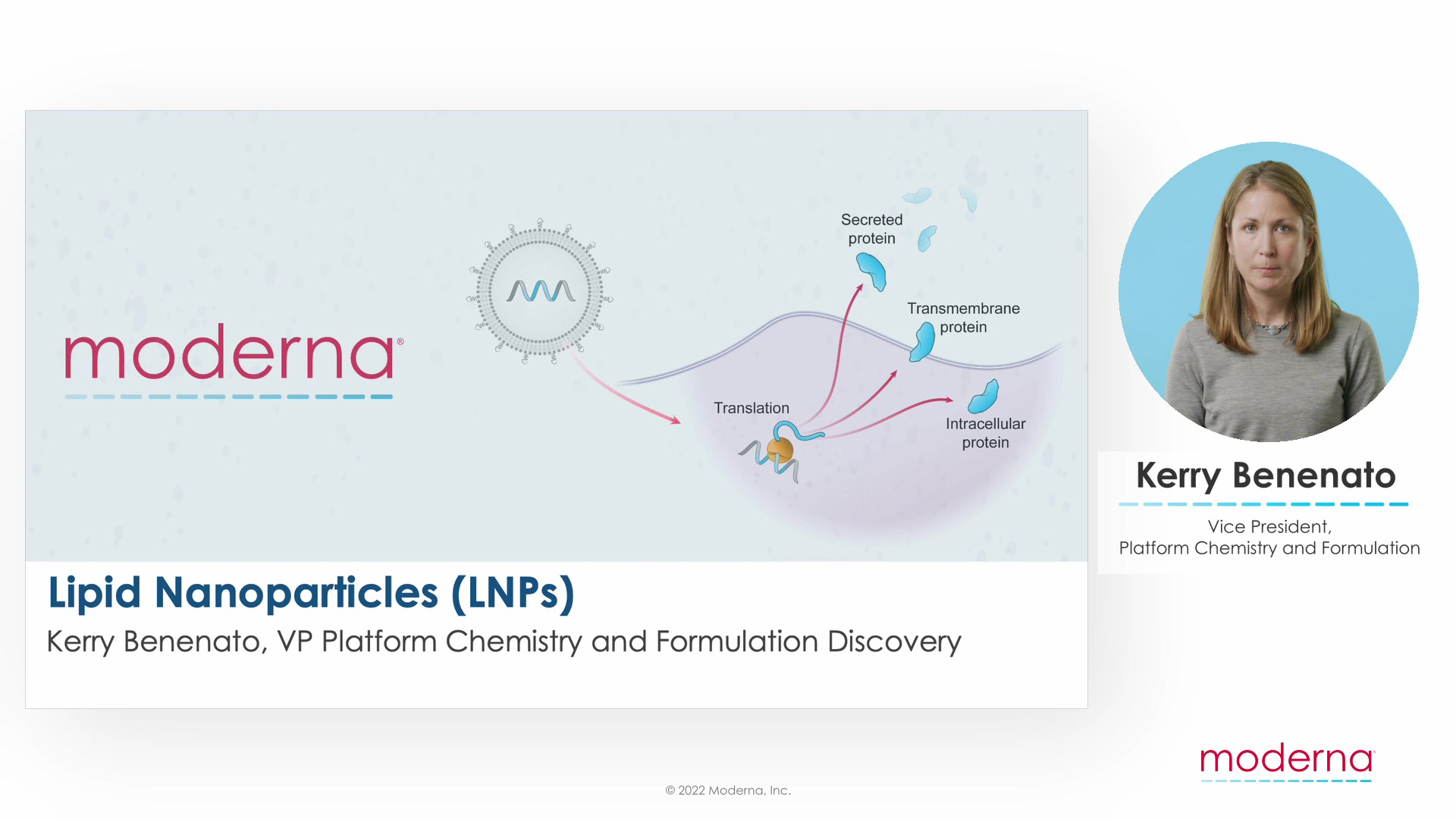
February 9, 2022 | 25:26
Explore resources by selecting a category of your choice

Categories: mRNA Vaccines, Delivery Science
Journal Article
View resource
Categories: mRNA Vaccines, Delivery Science, Preclinical
Journal Article
View resource
Categories: mRNA Vaccines, Global Health, mRNA Science, Delivery Science
Journal Article
View resource
Categories: mRNA Vaccines, Delivery Science
Journal Article
View resource
Categories: mRNA Vaccines, Delivery Science
Lipid nanoparticle (LNP)-formulated mRNA vaccines were rapidly developed and deployed in response to the SARS-CoV-2 pandemic. Due to the labile nature of mRNA, identifying impurities that could affect product stability and efficacy is crucial to the long-term use of nucleic-acid based medicines. Herein, reversed-phase ion pair high performance liquid chromatography (RP-IP HPLC) was used to identify a class of impurity formed through lipid:mRNA reactions; such reactions are typically undetectable by traditional mRNA purity analytical techniques. The identified modifications render the mRNA untranslatable, leading to loss of protein expression. Specifically, electrophilic impurities derived from the ionizable cationic lipid component are shown to be responsible. Mechanisms implicated in the formation of reactive species include oxidation and subsequent hydrolysis of the tertiary amine. It thus remains critical to ensure robust analytical methods and stringent manufacturing control to ensure mRNA stability and high activity in LNP delivery systems. Lipid nanoparticle delivery of mRNA vaccines has become of particular importance, however, mRNA stability is a major concern. Here, the authors report on a study of lipid impurity mRNA interactions using reverse phase ion pair HPLC to identify reactions which render the mRNA untranslatable, reducing vaccine efficiency.
Journal Article
View resource
Categories: mRNA Science, Delivery Science
The increasing number of approved nucleic acid therapeutics demonstrates the potential to treat diseases by targeting their genetic blueprints in vivo. Conventional treatments generally induce therapeutic effects that are transient because they target proteins rather than underlying causes. In contrast, nucleic acid therapeutics can achieve long-lasting or even curative effects via gene inhibition, addition, replacement or editing. Their clinical translation, however, depends on delivery technologies that improve stability, facilitate internalization and increase target affinity. Here, we review four platform technologies that have enabled the clinical translation of nucleic acid therapeutics: antisense oligonucleotides, ligand-modified small interfering RNA conjugates, lipid nanoparticles and adeno-associated virus vectors. For each platform, we discuss the current state-of-the-art clinical approaches, explain the rationale behind its development, highlight technological aspects that facilitated clinical translation and provide an example of a clinically relevant genetic drug. In addition, we discuss how these technologies enable the development of cutting-edge genetic drugs, such as tissue-specific nucleic acid bioconjugates, messenger RNA and gene-editing therapeutics. This Review provides an overview of four platform technologies that are currently used in the clinic for delivery of nucleic acid therapeutics, describing their properties, discussing technical advancements that led to clinical approval, and highlighting examples of approved genetic drugs that make use of these technologies.
Journal Article
View resource
Categories: Delivery Science
The success of mRNA-based therapies depends on the availability of a safe and efficient delivery vehicle. Lipid nanoparticles have been identified as a viable option. However, there are concerns whether an acceptable tolerability profile for chronic dosing can be achieved. The efficiency and tolerability of lipid nanoparticles has been attributed to the amino lipid. Therefore, we developed a new series of amino lipids that address this concern. Clear structure-activity relationships were developed that resulted in a new amino lipid that affords efficient mRNA delivery in rodent and primate models with optimal pharmacokinetics. A 1-month toxicology evaluation in rat and non-human primate demonstrated no adverse events with the new lipid nanoparticle system. Mechanistic studies demonstrate that the improved efficiency can be attributed to increased endosomal escape. This effort has resulted in the first example of the ability to safely repeat dose mRNA-containing lipid nanoparticles in non-human primate at therapeutically relevant levels.
Journal Article
View resource
Categories: mRNA Vaccines, Delivery Science
Messenger RNA (mRNA) has emerged as a new category of therapeutic agent to prevent and treat various diseases. To function in vivo, mRNA requires safe, effective and stable delivery systems that protect the nucleic acid from degradation and that allow cellular uptake and mRNA release. Lipid nanoparticles have successfully entered the clinic for the delivery of mRNA; in particular, lipid nanoparticle–mRNA vaccines are now in clinical use against coronavirus disease 2019 (COVID-19), which marks a milestone for mRNA therapeutics. In this Review, we discuss the design of lipid nanoparticles for mRNA delivery and examine physiological barriers and possible administration routes for lipid nanoparticle–mRNA systems. We then consider key points for the clinical translation of lipid nanoparticle–mRNA formulations, including good manufacturing practice, stability, storage and safety, and highlight preclinical and clinical studies of lipid nanoparticle–mRNA therapeutics for infectious diseases, cancer and genetic disorders. Finally, we give an outlook to future possibilities and remaining challenges for this promising technology. Lipid nanoparticle–mRNA formulations have entered the clinic as coronavirus disease 2019 (COVID-19) vaccines, marking an important milestone for mRNA therapeutics. This Review discusses lipid nanoparticle design for mRNA delivery, highlighting key points for clinical translation and preclinical studies of lipid nanoparticle–mRNA therapeutics for various diseases.
Journal Article
View resource
Categories: mRNA Vaccines, Delivery Science
mRNA vaccines have the potential to tackle many unmet medical needs that are unable to be addressed with conventional vaccine technologies. A potent and well-tolerated delivery technology is integral to fully realizing the potential of mRNA vaccines. Pre-clinical and clinical studies have demonstrated that mRNA delivered intramuscularly (IM) with first-generation lipid nanoparticles (LNPs) generates robust immune responses. Despite progress made over the past several years, there remains significant opportunity for improvement, as the most advanced LNPs were designed for intravenous (IV) delivery of siRNA to the liver. Here, we screened a panel of proprietary biodegradable ionizable lipids for both expression and immunogenicity in a rodent model when administered IM. A subset of compounds was selected and further evaluated for tolerability, immunogenicity, and expression in rodents and non-human primates (NHPs). A lead formulation was identified that yielded a robust immune response with improved tolerability. More importantly for vaccines, increased innate immune stimulation driven by LNPs does not equate to increased immunogenicity, illustrating that mRNA vaccine tolerability can be improved without affecting potency.
Journal Article
View resourcePartner with us to bring this global health initiative to life.